Optimize Website for AI Search
SEO is most of the AI search battle
 By Mark Cantrell, Founder & CEO, Upward Bound MediaLast updated
Short answer
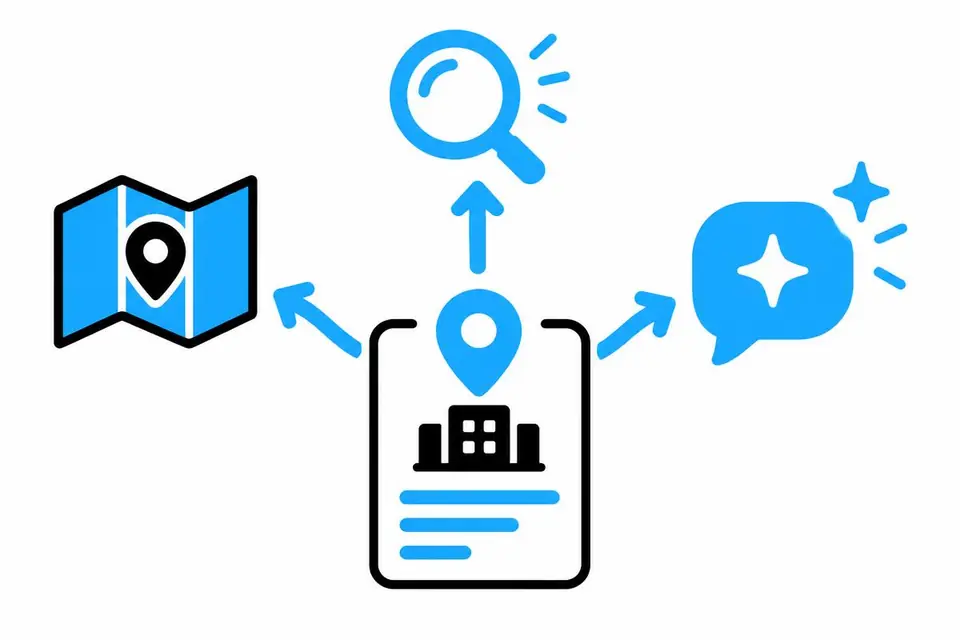
Build the website properly for SEO first. The Mirror Strategy builds the site so Google, Google Maps and AI tools like ChatGPT, Google AI Overviews and Perplexity all read the same facts.
On this page
AI search optimization starts with SEO
Mark Cantrell
"Doing the site properly for SEO is like 90% of the battle for AI searches."
Answer engine optimization (AEO) needs matching facts
Your website and Google Business Profile state the same name, address and phone, word for word. Lock that in with NAP Consistency.
Generative engine optimization (GEO) reads site structure
Each category becomes a services hub. See Website Structure for SEO.
AI SEO works one service page at a time
Every profile service gets its own page that covers that one service. Build them with Service Pages.
Linked pages show AI tools how services connect
Service pages link up to their hub, and hubs link up to the homepage. Follow the Internal Linking Strategy.
What every Mirror Strategy build adds for AI
Plain declarative copy
Every page states who does what, where. That means the business, the service and the place, in plain words.
Schema markup
Schema is code that gives search engines structured facts about the business.
Letting AI crawlers in
The robots.txt file allows GPTBot, ClaudeBot, PerplexityBot and Google-Extended to read the site.
An llms.txt file
Every build gets an llms.txt file that lists the site's pages. It helps, but it is not the fix. The fix is the site itself.
Do this
- Fix the website's SEO first
- Copy that says "[Business name] does [Service] in [City], [State]."
Not this
- Add an llms.txt file and call it done
- Vague copy that never says who, what or where